Russia to Include E-Cigarettes in Mandatory Labeling Pilot from July 14, Managed via the “Honest Sign” System

Jul.11.2025
Russia to Include E-Cigarettes in Mandatory Labeling Pilot from July 14, Managed via the “Honest Sign” System
The Russian government is expanding its product labeling pilot to include e-cigarettes, adding them to the list of goods requiring labels. The pilot will run from July 14, 2025, to February 28, 2026, allowing market participants to voluntarily apply free QR codes to products that meet specific codes.

Key Points:


·Experiment Scope: The experiment will include new e-cigarettes and similar reusable steam devices (including tobacco heating devices), corresponding to the TN VED (product code) 8543 4000 00 of the Eurasian Economic Union. 


·Time and Method: The voluntary experiment will take place from July 14, 2025 to February 28, 2026, with free QR codes provided as a means of identification. 


·Core Objective: Testing the application of label technology, researching market and system interaction, preventing counterfeit goods, and facilitating consumer verification. 


·Follow-up Arrangements: Clear guidelines for participating applications, registrations, and information input will be provided by August 31, 2025. It will be included in the "Honest Label" system management.


【2Firsts News Flash】According to a report by TASS on July 7th, the Russian government is further strengthening its regulation of the e-cigarette market. As an important experiment, e-cigarettes have been included in the category of products that require labeling. According to the relevant regulations, the list of specific types of electronic products has been expanded to include "e-cigarettes and similar personal reusable vapor devices (tobacco heating devices)". This experiment will officially begin on July 14, 2025, and will continue until February 28, 2026.


Market participants can choose to voluntarily apply identification means for reusable e-cigarettes and similar products that comply with the TN VED (commodity code) 8543 4000 00 of the Eurasian Economic Union (EAEU). In this trial, QR codes will be provided free of charge for the relevant products as key identification markers. By August 31, 2025, the Russian Ministry of Industry and Trade will detail in the method recommendations the submission process for participation applications, the registration process in the integrity mark system, and the specific information to be entered into the system.


A national-level "honest label" system is currently conducting a voluntary trial. Consumers can use this system to easily verify the authenticity of products. According to reports from TASS, this trial has multiple important goals. On one hand, it aims to comprehensively test the application of identification technology and evaluate its feasibility and effectiveness in practical use. On the other hand, it delves into the interaction patterns between market participants and the system in order to optimize and improve it in the future. Additionally, by implementing a labeling system, it effectively prevents counterfeit products from entering store shelves, thereby safeguarding market order and consumer rights. Furthermore, this experiment also provides an opportunity to test the technology of using QR codes, helping to identify the best application methods.


We welcome news tips, article submissions, interview requests, or comments on this piece.

Please contact us at info@2firsts.com, or reach out to Alan Zhao, CEO of 2Firsts, on LinkedIn


Notice

1.  This article is intended solely for professional research purposes related to industry, technology, and policy. Any references to brands or products are made purely for objective description and do not constitute any form of endorsement, recommendation, or promotion by 2Firsts.

2.  The use of nicotine-containing products — including, but not limited to, cigarettes, e-cigarettes, nicotine pouchand heated tobacco products — carries significant health risks. Users are responsible for complying with all applicable laws and regulations in their respective jurisdictions.

3.  This article is not intended to serve as the basis for any investment decisions or financial advice. 2Firsts assumes no direct or indirect liability for any inaccuracies or errors in the content.

4.  Access to this article is strictly prohibited for individuals below the legal age in their jurisdiction.


Copyright


This article is either an original work created by 2Firsts or a reproduction from third-party sources with proper attribution. All copyrights and usage rights belong to 2Firsts or the original content provider. Unauthorized reproduction, distribution, or any other form of unauthorized use by any individual or organization is strictly prohibited. Violators will be held legally accountable.

For copyright-related inquiries, please contact: info@2firsts.com


AI Assistance Disclaimer


This article may have been enhanced using AI tools to improve translation and editorial efficiency. However, due to technical limitations, inaccuracies may occur. Readers are encouraged to refer to the cited sources for the most accurate information.

We welcome any corrections or feedback. Please contact us at: info@2firsts.com

U.S. Fifth Circuit Vacates NicQuid Vape MDO, Says FDA Comparative-Efficacy Standard Violated APA Procedures
According to VitalLaw on August 27, 2026, the U.S. Court of Appeals for the Fifth Circuit vacated an FDA marketing denial order (MDO) against NicQuid LLC, ruling that the agency’s comparative-efficacy standard for electronic nicotine delivery system (ENDS) applications had become a substantive rule requiring notice-and-comment rulemaking under the Administrative Procedure Act (APA). The court did not reject FDA’s authority to compare the public health benefits and risks of flavored vapes, but held that the agency could not establish a broadly binding standard through informal adjudications. The case was remanded to FDA for further proceedings.
Aug.28
Philippine Local Governments Urge Marcos to Prioritize Smoke- and Vape-Free Bill
The League of Municipalities of the Philippines (LMP) has urged President Ferdinand Marcos Jr. to prioritize the Smoke- and Vape-Free Bill, seeking a nationwide legal framework for tobacco and vape regulation. Local government leaders said national legislation would help standardize enforcement and strengthen public health measures. The proposal remains at the advocacy stage and has not yet become law.
Jul.29
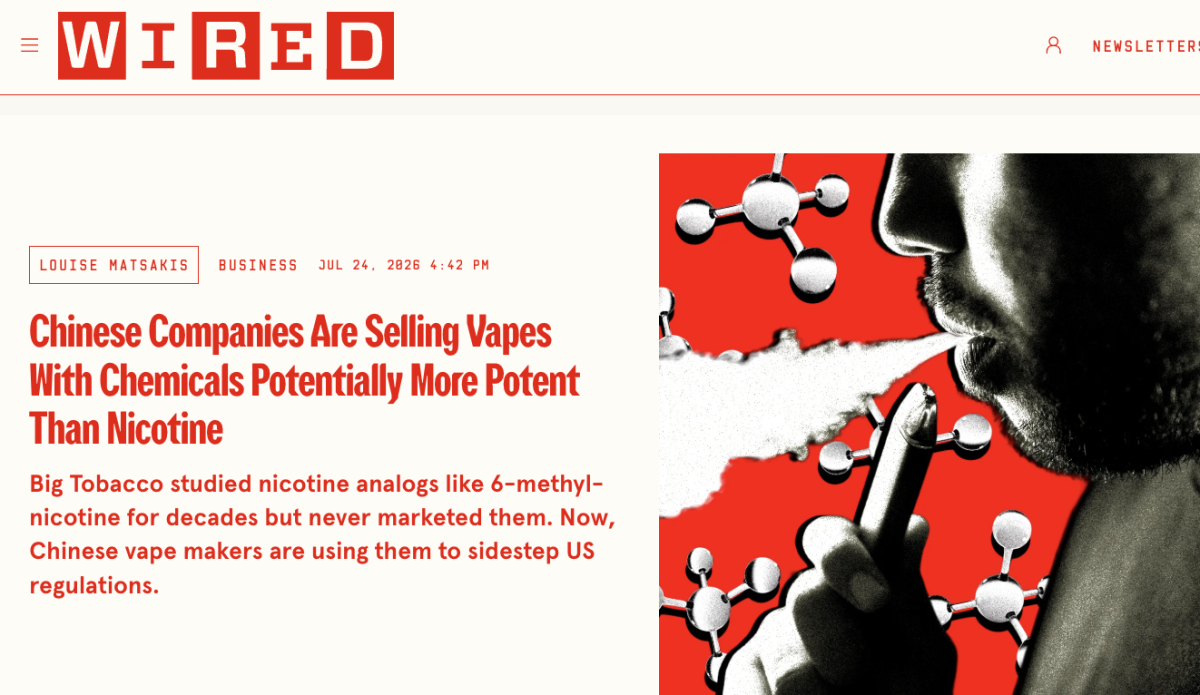
WIRED Investigation: Chinese-Made Vapes Turn to 6-Methyl-Nicotine and Other Analogs, Challenging U.S. Regulation
U.S. technology and investigative publication WIRED has examined how nicotine analogs are emerging as a new challenge for the country’s vape regulatory framework. The article argues that after the U.S. expanded federal oversight of nicotine products in 2022, some manufacturers began using nicotine-like compounds such as 6-methyl-nicotine that may fall outside existing definitions. Researchers cited by WIRED said some nicotine analogs could be more potent than traditional nicotine, although human health impacts remain unclear. U.S. policymakers are considering broader definitions of nicotine to bring these compounds under federal oversight.
Jul.27
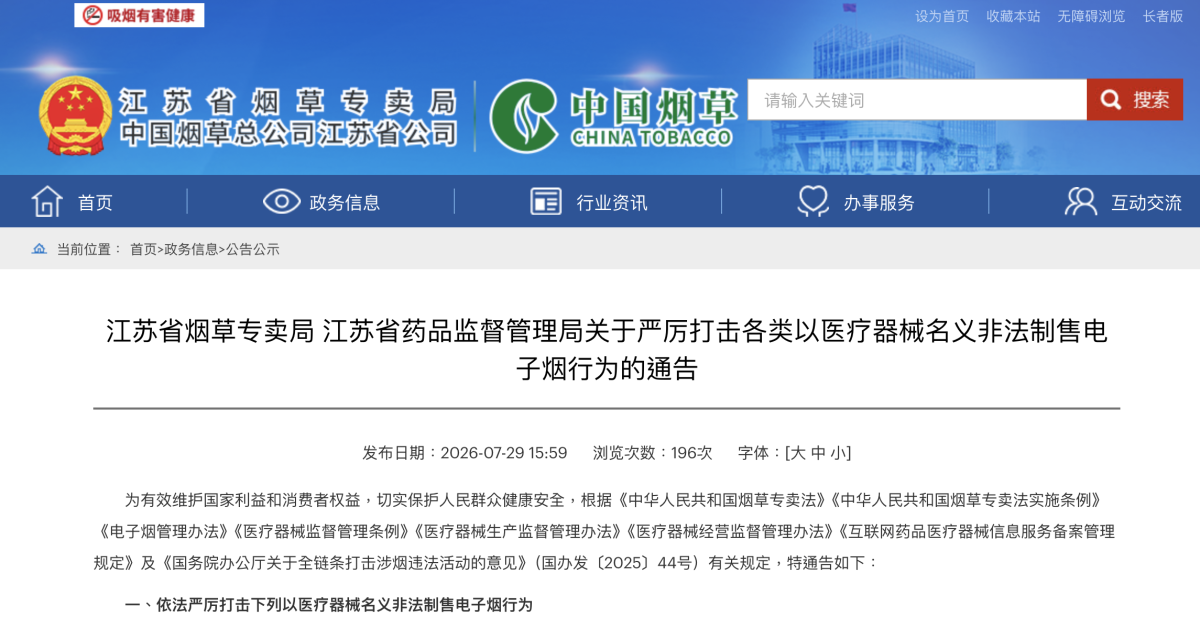
China’s Jiangsu Tobacco Monopoly Bureau and Drug Regulator Target Illegal Vape Sales Disguised as Medical Devices, Define Six Violations
China’s Jiangsu Tobacco Monopoly Bureau and Jiangsu Provincial Medical Products Administration have issued a joint notice targeting illegal production and sales of vape products disguised as medical devices. The notice identifies six categories of violations, including obtaining medical licenses through false materials, misusing medical device credentials, expanding production beyond approved scopes, and using medical device-related online platforms to promote or sell vape products. The action is based on China’s tobacco and medical device regulations and aims to strengthen vape oversight and consumer protection.
Aug.04
JTI Makes Third Bet on South Korea as Ploom AURA Enters a Market Dominated by lil and IQOS
Japan Tobacco International is stepping up its heated tobacco push in South Korea with Ploom AURA. Since its official launch in April 2026, the device's limited First Edition and Glacier White version have sold out, while distribution has expanded across Seoul, Incheon, Gyeonggi Province and airport duty-free channels. The rollout marks JTI's third major attempt to build a stronger heated tobacco position in South Korea, following Ploom TECH in 2019 and Ploom X Advanced in 2024. At the group level, JT plans to invest about ¥800 billion, approximately $5 billion, in reduced-risk products from 2026 through 2028, with heated products and Ploom identified as its primary investment priority.
Aug.14
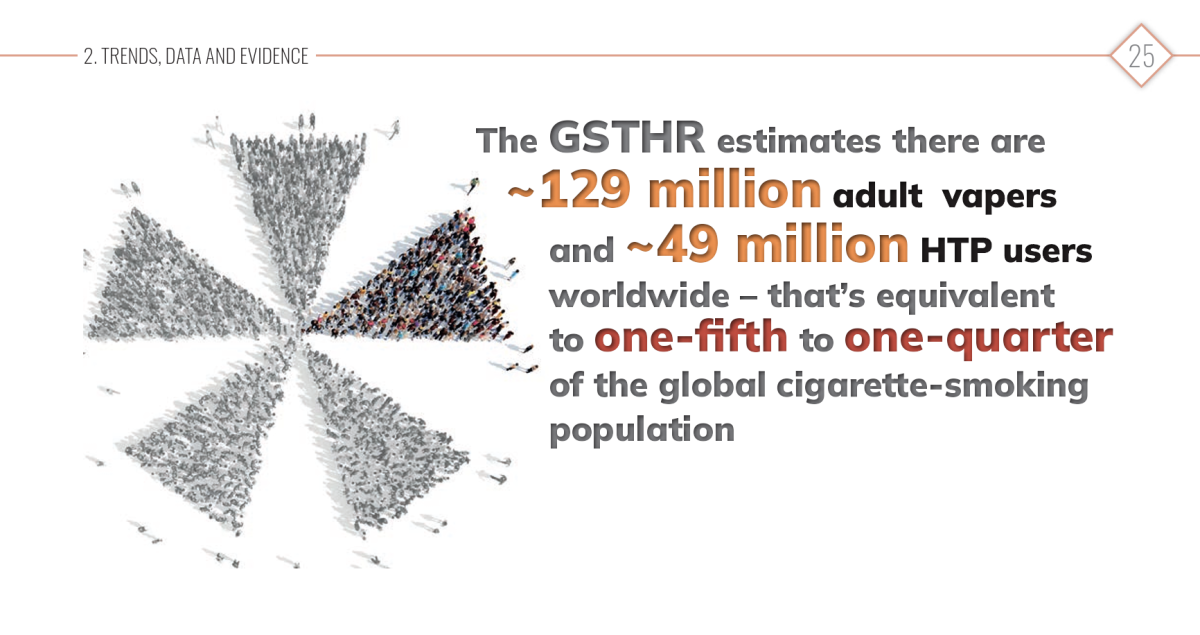
GSTHR Estimates 200 Million People Use Non-Combustible Nicotine Products as 28 Countries Show Rising Use Alongside Falling Smoking Rates
The Global State of Tobacco Harm Reduction, a project operated by Knowledge·Action·Change, estimates that about 200 million people worldwide use non-combustible nicotine products including vapes, heated tobacco, nicotine pouches and snus. Its 2026 report says use of these products rose alongside declining smoking rates in 28 countries it analyzed. The data do not establish that all 200 million users have quit smoking, nor do they prove a direct causal relationship. GSTHR also says regulatory restrictions on the products continue to expand in many markets.
Sep.10